The full encyclopedia
Every leaf, region, and tradition.
50 articles across 8 topics.
By topic
8 topics
The realised record of China's tea market
6 articles
China's tea export routes: mapping every leaf from origin to overseas market
6 articles
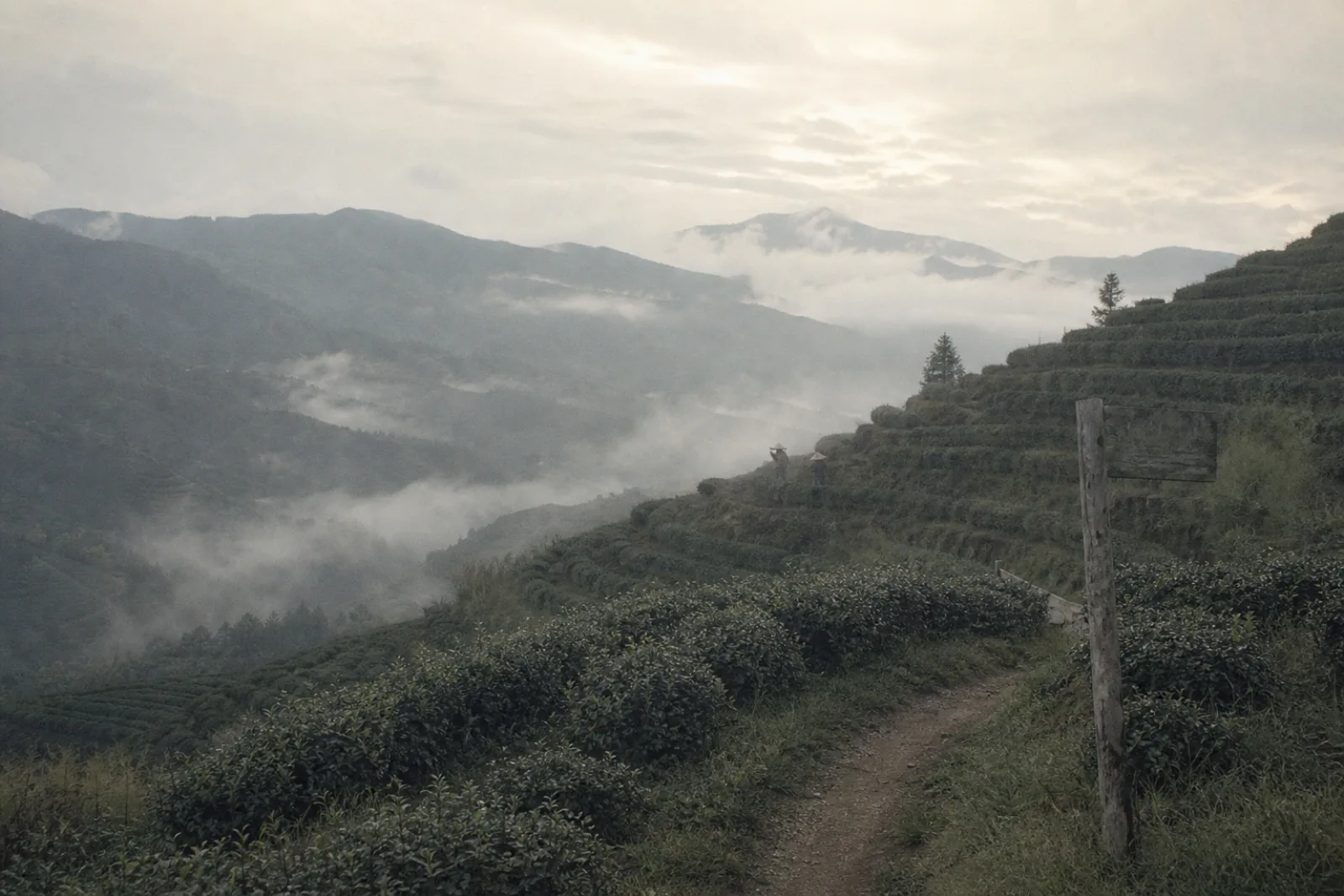
Tracking the rhythm of China’s tea harvest calendar
6 articles
Market trends — how Chinese tea’s global map is being redrawn
7 articles
Tracking tea harvests from Yunnan to Anhui
7 articles
Where the modern tea buyer shops — subscription boxes, sample packs, and cross-border e-commerce
6 articles
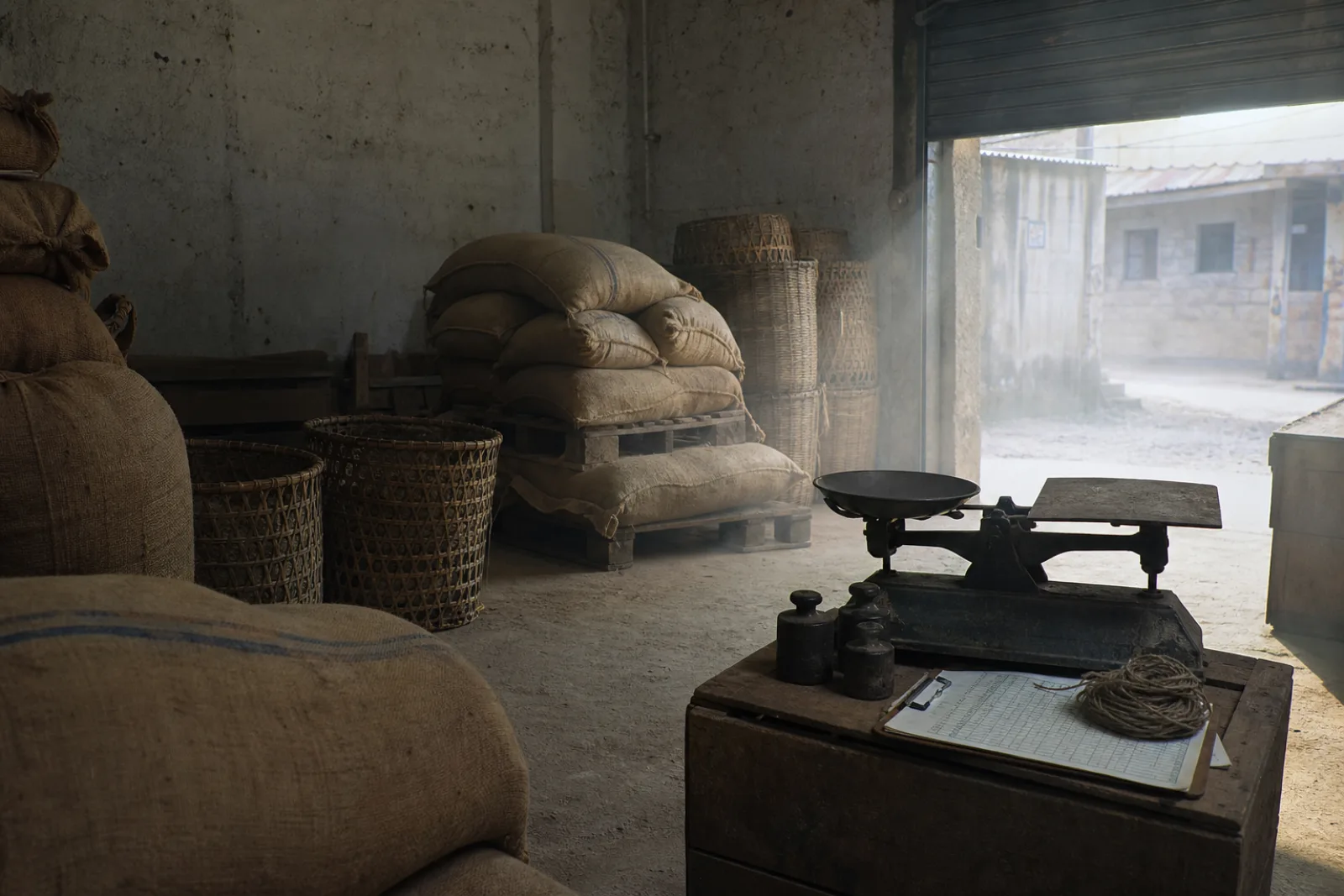
From plucker to purchaser — the true cost of tea
6 articles
Vintage pu'er pricing: how age, provenance, and storage shape value
6 articles
All articles
50 pieces, latest first
- — 01
1990s Menghai 7542 — twenty-year pricing trend
The Menghai 7542 recipe — produced since 1975 — has become the standard-bearer for vintage pu'er pricing. Over two decades, its market value has charted the rise of pu'er from niche commodity to global collectible, reflecting changes in storage science, Chinese consumption patterns, and auction culture.
- — 02
2025 vintage pu'er pricing report
A data-driven look at 2025 realised auction prices and private-sale data for vintage pu'er cakes from the 1980s through the 2010s, with analysis of regional premiums, storage effects, and shifting collector patterns across the Russia–Mongolia corridor.
- — 03
2026 spring harvest calendar — region by region
A region-by-region guide to when China's 2026 spring teas will be plucked, shipped, and hitting buyer's desks — from early March Bi Luó Chūn in Jiangsu to late April Dancong in Guangdong.
- — 04
Anxi 2026 — Tieguanyin spring yield report
Anxi's 2026 spring Tieguanyin harvest arrived early but compressed, delivering an estimated 14,500 metric tons of maocha — 6% above the five-year average. Village-level disparities widened as Xiping held its lead, while Gande and Xianghua gained ground. Grade distribution tilted toward mid-tier offerings, and the relentless march of light-rolling qingxiang processing continued — though a small nongxiang revival surprised buyers.
- — 05
ASEAN tea export shift — Vietnam, Thailand, Malaysia trade-data
Chinese tea exports to ASEAN are shifting in volume, destination, and product mix. Data from 2023–2025 reveals Vietnam’s rise as a transshipment hub, Thailand’s appetite for premium greens and oolongs, and Malaysia’s deepening role as a pu-erh storage and re-distribution centre. This report unpacks customs records, storage premiums, and buyer behaviour behind the numbers.
- — 06
Autumn 2026 harvest windows — Phoenix, Wuyi, Anxi, Yunnan
As the leaves on China’s ancient tea mountains take on their post-monsoon gloss, buyers chart the coming weeks. The autumn pluck — sometimes a second act, often the aromatic crescendo — opens in waves across four core regions. We map the expected 2026 windows for Phoenix dancong, Wuyi rock tea, Anxi tieguanyin, and Yunnan puerh, drawing on grower interviews, meteorological records, and early field reports.
- — 07
Beijing spring 2026 vintage tea auction — realised vs. estimate
Poly Auction Beijing's spring 2026 vintage tea sale saw 87% of lots clear, with total realised value reaching ¥42.3 million. Raw pu'er dominated, but the story was in the misses — over a third of 2007-era cakes failed to meet low estimates, while well-stored 1999–2003 productions from named villages doubled expectations.
- — 08
Broker markups in Yunnan — what farmers receive vs. wholesale price
A field survey across Menghai, Lincang, and Jinggu reveals the gap between tea-farmer earnings and city-gate wholesale prices. While a kilo of single-origin old-tree maocha may sell for $400 in Kunming, many growers see less than 30% of that. This report traces the broker tiers, regional discrepancies, and the slow push toward cooperative transparency.
- — 09
Chinese tea exports to MENA — 2026 destination breakdown
China exported an estimated 83,200 tonnes of tea to the Middle East and North Africa in 2025 — a 9.7% increase year-on-year. This report maps the 2026 destination breakdown by volume, value, and category, drawing on customs declarations, freight manifests, and Yunnan-based procurement intelligence.
- — 10
China tea exports to the EU — 2026 customs-code breakdown
A granular look at how Chinese tea enters the 27-member bloc in 2026, from HS codes and volume shares to the pesticide-residue threshold that is quietly redrawing supply maps across Yunnan, Fujian, and Hunan.
- — 11
China tea exports to Russia — 2026 trade-data analysis
Russia remains the largest single-country export destination for Chinese tea, but shifting logistics and consumer preferences are reshaping the flow. A look at the first nine months of 2026 maps volume, value, and category realignments — including why the Russian market’s taste for dark tea is deepening.
- — 12
China tea exports to the United States — 2026 HS-code analysis
A granular breakdown of Chinese tea trade to the US through the lens of Harmonized System codes, with volume projections, tariff analysis, and on-the-ground procurement insights from Kunming.
- — 13
Chinese cross-border tea e-commerce — 2026 growth and category mix
Cross-border e-commerce for Chinese tea surged in 2025, with pu-erh and oolong leading the charge. Procurement data from Kunming points to a 2026 mix shifting toward value-added formats — single-origin mini-cakes, subscription boxes, and authenticated aged sheng. Here's where the overseas buyer's dollar is landing.
- — 14
Chinese tea export shift — where the volume actually moved in 2026
The structural realignment of Chinese tea exports: falling green tea bulk volumes, surging pu'er and white tea shipments to new markets, and what it means for pricing at origin.
- — 15
The Chinese tea-room revival — physical retail data, 2024-2026
China’s physical tea rooms, long eclipsed by e-commerce and fast-casual chains, are staging a return — driven by a new generation of customers, experiential retail formats, and a post-pandemic desire for shared third spaces. Based on 2024 sales and footfall data, this report maps the momentum and cautions ahead.
- — 16
Cooperative pricing in Fujian white-tea villages — 2026 survey
A 2026 survey of 23 cooperative tea-processing units across Fuding and Zhenghe reveals the spread between farmgate costs and wholesale pricing for *Bái Háo Yín Zhēn*, *Bái Mǔ Dān*, and *Shòu Méi*. Cooperative members retained an average of 74% of the final wholesale price, but premium-grade lots in strong demand show the highest negotiation leverage.
- — 17
Dayi vs. Xiaguan — the vintage pricing spread across two decades
From fungible commodity to bifurcated asset: how two state-born factories diverged in collector value — and what 7542 and 8653 cakes actually sell for in 2024.
- — 18
DTC Chinese-tea brands — 2026 growth and consolidation
A crop-year shaped by thinning margins, supply-side realignment, and a pivot toward asset-grade positioning reshapes the direct-to-consumer landscape for Chinese tea.
- — 19
Fair-trade premiums in Chinese tea — adoption and pricing impact
Despite decades of growing demand for ethical tea, fair-trade certification covers only a fraction of China’s output. This report dissects farm-gate premiums, supply-chain erosion, and the reasons most smallholders remain outside the system.
- — 20
Fuding Bái Háo Yín Zhēn — 2026 spring yields and grade distribution
Early-crop assessments from Fuding’s core producing villages suggest a 6–8% rise in first-flush bud volumes, though the share of true silver-needle grade may be slipping as producers chase tonnage. We break down the 2026 harvest numbers, grade splits, and what they mean for the season ahead.
- — 21
Guangzhou spring 2026 — vintage tea auction results
A breakdown of the May 7-8 event at Poly Plaza, where 437 lots of aged pu'er, white tea, and rock oolong drew an 82% sell-through rate. Realised prices, hammer surprises, and a cooling trend in top-tier sheng.
- — 22
Hong Kong autumn 2025 pu'er auction — lot-level recap
The Heritage Tea Auctions autumn sale in Hong Kong moved 147 lots of vintage pu'er, realising HK$52.3 million against a HK$38 million aggregate low estimate. Amid cooling mainland demand, top-tier factory cakes and dry-stored Yiwu old-tree material still drew aggressive bidding.
- — 23
Instagram and TikTok tea marketing — what actually converts in 2026
Chinese tea brands are pouring into short-form video, but not all strategies deliver. Data from 2026 shows that authenticity, sensory immersion and transparent sourcing outperform polished ads. Here is what moves tea from scroll to cart.
- — 24
Jǐngmài old-tree yields — Yunnan's 2026 producer survey
A survey of 47 smallholder producers across nine villages in *Jǐngmài* (景迈) Mountain reveals cautious optimism for the 2026 spring harvest — yields are projected to rise 4–7% year-on-year, but quality concerns linger after a dry winter. Our regional correspondent spoke with farmers, tea masters, and buyers from Pu'er to Moscow to assess the numbers behind the oldest trees.
- — 25
The Lao Banzhang vintage premium — what 2009-2013 cakes really clear at
A data-driven deep-dive into realised auction and private-sale prices for Lao Banzhang sheng pu-erh cakes from the 2009–2013 vintages — the years that transformed a Bulang mountain village into the global pu-erh collector's benchmark.
- — 26
Monsoon impact on summer Yunnan and Fujian yields
As the East Asian monsoon advances, tea gardens across Yunnan and Fujian brace for the annual deluge that shapes the volume, quality, and price of China's summer tea harvests. In 2026, meteorological signals point to a heavier-than-normal monsoon, raising questions about yield resilience and market effects — and whether the premium for drier-summer vintages will widen again.
- — 27
Phoenix dancong 2026 — spring vs. autumn yield comparison
Spring 2026 on Wudong Mountain delivered record per-bush yields for old-tree *Mì Lán Xiāng* — but autumn volumes tell a more subdued story. We break down the numbers, weather patterns, and market implications for China’s most sought-after oolong.
- — 28
Phoenix dancong as an emerging asset class
As collectors wake up to the scarcity of ancient Phoenix trees, dancong oolong is leaving its tea-drinking comfort zone to become a structured asset — but the market remains in its adolescence.
- — 29
Pre-Qingming vs. post-Qingming — the pricing differential analysed
The weeks around the Qingming Festival (April 4–5) split the spring tea market into two distinct pricing tiers. Pre-Qingming teas from China’s most celebrated green and white tea origins routinely command 2–5× the price of the next picking window, yet the gap is far from uniform. This report breaks down the differential by region, grade standard, and buyer behaviour, using 2026 origin data.
- — 30
Provenance documentation and its effect on realised auction price
A Hong Kong auction lot of 1990s Menghai 7542 with original factory tickets closed 42% higher than an otherwise identical lot without papers. Across 1,200 vintage pu'er lots tracked from 2018–2025, documented provenance — from production certificates to storage logs — consistently lifts hammer prices by an average of 28%.
- — 31
Pu'er cross-border flow — Hong Kong to mainland and back
The quiet corridor that sends pu'er from Yunnan to Hong Kong for aging — and then back to mainland collectors — moves over a billion yuan annually. A tea.report analysis of volumes, premiums, and storage provenance in China's most circular tea trade.
- — 32
Pu'er secondary market 2026 — broker volume and price discovery
In 2026, the secondary market for vintage Pu'er has moved far beyond casual collector swaps. Broker-mediated trades across the Russia–Mongolia corridor now drive a new layer of price discovery, with volumes doubling year-on-year and provenance scrutiny reshaping valuations.
- — 33
The sample-pack economy — DTC tea acquisition costs in 2026
Sample packs have evolved from a tasting curiosity into the leading acquisition mechanism for direct-to-consumer Chinese tea brands. By 2026, rising leaf prices, packaging costs and logistics friction are squeezing the unit economics — and procurement strategy is becoming a brand's competitive moat.
- — 34
Shengtai (生态) vintage cake pricing — the eco-grade premium
Data from auctions, private sales, and collector surveys show a persistent price premium for shengtai-labelled pu'er cakes. Is the eco-grade markup backed by scarcity, or is it a branding gamble in the vintage market?
- — 35
Shipping windows — when spring tea actually reaches EU and US ports
Spring tea leaves Yunnan and Fujian from late March through early May, but the gap between plucking and a US or EU cup stretches far beyond harvest. Freight consolidation, port congestion, and customs clearance add weeks. This report maps the real timeline so buyers can plan inventory before the first sips arrive.
- — 36
Single-bush oolong — the premium that won't compress
Pricing data from Phoenix Mountain and the Wuyi cliffs shows a decade-long divergence: while most oolong trades sideways, teas traceable to a single bush command premiums of 5–15× over even small-plot lots. With yields measured in grams and buyers competing at blind auctions, the asset class is not compressing.
- — 37
Single-buyer vs. cooperative-pooled yields — economic comparison
A data-driven comparison of two dominant Chinese tea sourcing models — direct single-buyer contracts versus cooperative-pooled yields — reveals stark differences in price stability, quality control, and farmer risk. The analysis draws on producer data from Yunnan and Fujian.
- — 38
Storage provenance and the vintage pu'er pricing curve
How storage conditions in Kunming, Hong Kong, Guangdong, and Malaysia create price spreads of up to 50% for identical vintage cakes — with auction data, sensory benchmarks, and collector insights.
- — 39
Subscription tea clubs in 2026 — churn, LTV, and category-mix data
Monthly club churn holds at 8–12% for mass-market boxes but falls to as low as 5% for curated single-origin tiers. LTV data from China's tea e-commerce scene shows a 2.4x gap between generic and appellation-focused clubs. This report examines the numbers — and the procurement realities driving them.
- — 40
Top ten realised vintage tea lots, 2025-2026 auction cycle
This report examines the ten highest hammer prices from the 2025-2026 auction cycle, analysing the factory, storage, and provenance factors that drove a recalibration in the vintage pu-erh market.
- — 41
Air vs. sea — transport-cost analysis for tea imports to EU and US
When a container of aged pu'er can ride the waves for less than a dollar a kilo, while a consignment of spring *Lóngjǐng* demands a seat in an air cargo hold at ten times the price — the decision is never just arithmetic.
- — 42
US tea spend by generation — 2026 consumer survey results
A new survey of 4,500 US tea drinkers reveals how Gen Z, Millennials, Gen X and Boomers allocate their tea budgets in 2026 — and what it means for Chinese tea exporters and DTC brands.
- — 43
Vintage cake vs. loose-leaf — the auction-price spread analysed
Public-record auction results from Hong Kong, Beijing, and Guangzhou reveal a persistent spread between pressed vintage cakes and their loose-leaf counterparts. This report examines the drivers behind the premium, the rare cases where loose maocha outperforms, and what the spread says about the legacy of compression.
- — 44
Warehouse storage cost per kilogram per year — pu'er aging economics
The hidden carry cost of holding a cake for a decade — electricity, water, rent, and labor are the quiet artisans of age. An analytical deep-dive into the real cost of storing pu'er across China's three major aging climates.
- — 45
2026 spring weather impact on Yunnan tea — region by region
A fractured spring across Yunnan has reshaped the 2026 pu-erh harvest — early Lincang rains, sustained Menghai drought, and unseasonably warm nights in Jingmai. This report breaks down every major production zone, quantifies the quality shifts, and forecasts the price consequences for maocha and finished cakes.
- — 46
Aged white tea — the new collector category
Once dismissed as a regional novelty best consumed fresh, white tea is now the fastest-growing segment of China's aged tea market. Auction results, multi-year price curves, and storage infrastructure suggest a permanent shift — but the asset-class label carries both promise and risk.
- — 47
Wuyi rock-tea 2026 spring yields — zhèngyán, bànyán, and beyond
The 2026 spring harvest in the Wuyi Mountains leans into scarcity: zhengyan yields dip while demand for origin-verified rock tea intensifies. This report parses production estimates across the three traditional tiers.
- — 48
Wuyi rock-tea vendor consolidation — what changed in 2026
Eleven independent producers disappeared from the Wuyi map between January and September 2026 — absorbed by three buyers who now control over 40% of true zhèngyán output. The speed stunned even veteran traders. This report examines the regulatory, financial, and sensory consequences of the year that reshaped rock tea.
- — 49
Yiwu 2026 spring yields — early estimates
Spring 2026 in Yiwu arrives after a mild, dry winter that may compress the first-pick window and shift the classic honey-soft character of early *máo chá*. Early field assessments from six core villages suggest total spring output could dip 8–12 % below the five-year average, while early bud quality scores high on leaf-set density.
- — 50
Zhejiang Longjing — 2026 spring yield by sub-region
Zhejiang’s 2026 Longjing spring harvest beat an early March frost, with Xihu core output steady at 140 t and Qiantang and Yuezhou recording modest 2–3 % gains. First qingming batches reached Hangzhou markets on 22 March — two days ahead of 2025. This sub-regional breakdown examines the weather-driven shifts in volume, grade distribution, and the wholesale price signals likely to persist through August.